SCORM Cloud Alternative for Training Providers | scormPROXY
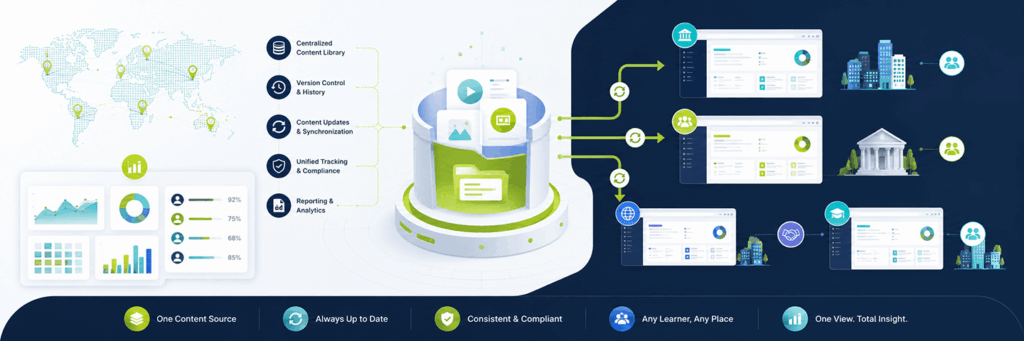
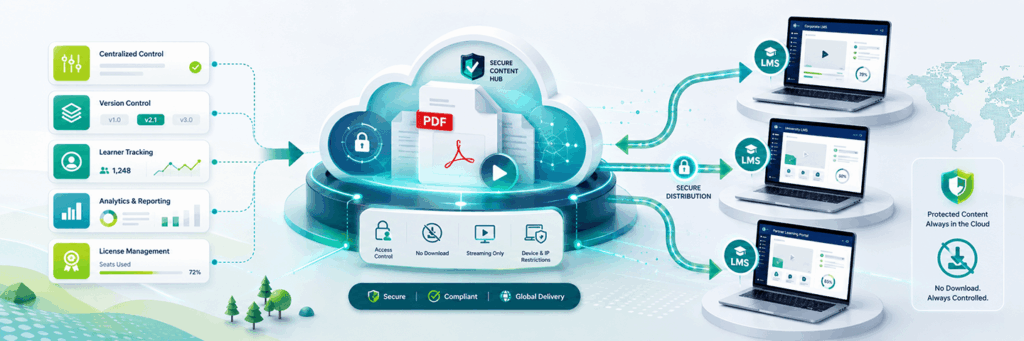
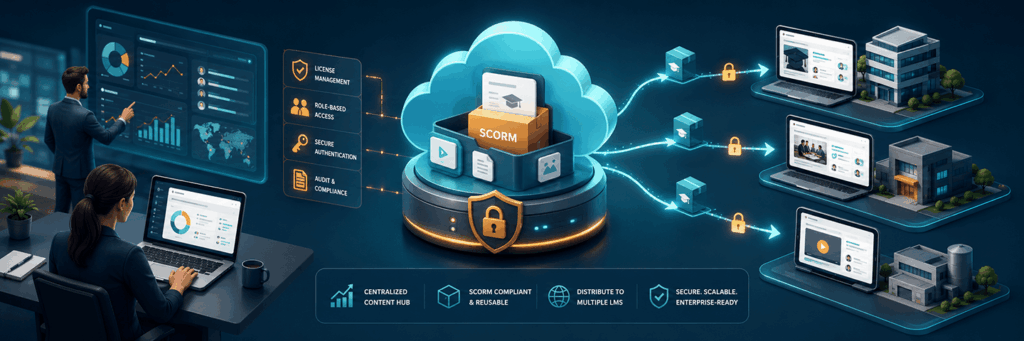
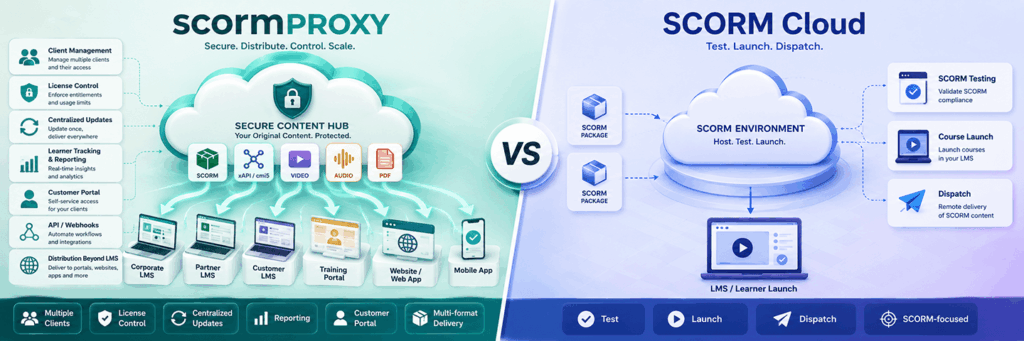
Looking for a SCORM Cloud Alternative? Key Factors Training Providers Should Compare If you sell, rent or distribute e-learning content to external clients, you may already know SCORM Cloud. It is one of the most established platforms in the e-learning industry and is often used to test, launch and dispatch SCORM content. However, not every organization looking for a SCORM Cloud alternative has exactly the same needs. Some companies only need a reliable way to launch or test SCORM packages. Others need a complete content distribution workflow: client management, license control, centralized updates, reporting, customer access, API automation and support for different delivery channels. This is where comparing SCORM Cloud alternatives becomes especially important. What should you look for in a SCORM Cloud alternative? A good SCORM Cloud alternative should not only be able to deliver SCORM content remotely. It should also help you manage the operational and commercial side of distributing learning content to clients. Before choosing a platform, training providers should consider the following questions: Can I distribute courses to multiple external LMS platforms? Can I keep the original course files protected in the cloud? Can I update content centrally without asking clients to upload new files? Can I control the number of licenses available for each client? Can I define license duration and expiration dates? Can I track learner activity, progress and completion? Can my clients access a portal to download connectors or view reports? Can I distribute content outside an LMS, for example through links, websites or email invitations? Can I automate processes using an API or webhooks? Can the platform support formats beyond SCORM? For many content providers, these questions are more important than simply asking whether a platform can “dispatch” a course. SCORM Cloud: a well-known solution for SCORM delivery SCORM Cloud is a mature and widely recognized platform. It is commonly used for SCORM testing, launching, dispatching and integration scenarios. For organizations that need a general-purpose SCORM environment, it can be a strong option. However, training providers that distribute content to many external clients often need more than content launch and dispatch. They need workflows for managing customers, connectors, licenses, reporting and ongoing commercial relationships. That is where a specialized platform such as scormPROXY can be a better fit. scormPROXY: a SCORM Cloud alternative focused on client-based content distribution scormPROXY is a cloud-based content distribution and licensing platform designed for organizations that sell, rent or distribute e-learning content to external clients. Instead of sending the original course files to each client, scormPROXY allows you to host your content in the cloud and distribute remote connectors (dispatchers), links or invitations. Your clients can access the content from their own LMS, WordPress site, intranet, website, CRM, ERP or directly by email invitation. This makes scormPROXY especially useful for: Training providers selling courses to companies. E-learning vendors distributing catalogues to multiple clients. Publishers and academies that need to protect their content. Organizations that manage several client platforms. Businesses that need license control, reporting and centralized updates. 1. Content formats: SCORM, xAPI, video, audio and PDF When comparing SCORM Cloud alternatives, supported formats are an important factor. scormPROXY supports SCORM 1.2, SCORM 2004, xAPI, MP4, MP3 and PDF. This allows organizations to distribute not only traditional SCORM packages, but also multimedia and document-based learning materials from the same platform. This is important for training providers whose catalogue includes a mix of e-learning courses, videos, podcasts, PDFs and other digital learning assets. 2. Remote LMS client management One of the main differences between a generic SCORM dispatch platform and scormPROXY is the focus on remote client management. With scormPROXY, you can register and manage external clients, assign connectors, allocate licenses, define access conditions and monitor usage for each client. This is useful when each client has its own LMS or learning environment. Instead of treating every dispatch as an isolated package, scormPROXY helps you manage the client relationship around the content. 3. Distribution beyond the LMS Many organizations searching for a SCORM Cloud alternative are not only distributing courses to LMS platforms. Some clients may use WordPress, intranets, websites, ERPs, CRMs or other non-LMS environments. Others may not have a platform at all and may need direct email invitations. scormPROXY supports several distribution channels: SCORM/xAPI connectors for LMS platforms. Link-based access for non-LMS platforms. WordPress distribution. Email invitations for direct learner access. This flexibility can be especially useful for training providers that work with many types of clients. 4. License control and expiration rules For commercial course distribution, license control is essential. scormPROXY allows you to allocate licenses to clients, limit the number of available registrations, define license duration and set expiration dates. This helps training providers sell or rent access to content while keeping control over usage. This is particularly important when courses are sold by number of learners, duration of access or client contract. 5. Centralized content updates A key advantage of remote content distribution is the ability to update content centrally. With scormPROXY, the original content remains hosted in the cloud. When a course is updated, the provider can manage the new version centrally, reducing the need to resend original files to every client. For training providers with many clients and frequent course updates, this can significantly reduce support work and operational complexity. 6. Customer Portal scormPROXY includes a Customer Portal that allows clients to access selected features depending on their permissions. Clients can use the portal to view available products, download connectors, request licenses and consult reports. This creates a more professional and scalable workflow for content providers that manage multiple customers. For many training providers, this is one of the most important differences when evaluating SCORM Cloud alternatives. 7. Reporting and tracking Reporting is not only about knowing whether a learner completed a course. For commercial content distribution, reporting often needs to answer questions such as: Which clients are consuming the most licenses? Which products are being used? Which learners have started or completed training? Which licenses are active,