

Author name: Sandra León

E-learning
Articles, e-Learning Trends

The 10 Most Innovative Trends in E-learning for 2024

Currently, educational technology (EdTech) plays a crucial role in the evolution of corporate learning. From the impact of Artificial Intelligence to immersive experiences in virtual reality, constant innovations in e-learning are redefining how organizations train their teams. In this article, we will explore the ten most innovative trends in e-learning that will shape the educational landscape in 2024. 1. Learning Experience Platforms (LXP) Learning Experience Platforms (LXP) are revolutionizing virtual training by placing the learner in practical learning situations. These platforms encourage the generation of knowledge, skills, and competencies through interactive and personalized experiences. They allow learners to face situations that simulate real-world scenarios, providing a fertile ground for skill development and competencies applicable directly in the workplace. 2. Immersive Learning: Virtual Reality, Augmented Reality, and Mixed Reality The digital revolution has opened doors to new educational dimensions. Virtual reality (VR), augmented reality (AR), and mixed reality (MR) have become essential catalysts for this change. These technologies not only transform the way we absorb information but also open up a range of educational possibilities thanks to advanced learning theories, such as Virtual Learning Objects (OVA). Virtual Learning Objects (OVA) are interactive digital representations of concepts, processes, or information designed to enhance student understanding and engagement. OVAs allow students to explore, manipulate, and experiment with educational content in a way that goes beyond the passivity of traditional methods. From science simulations to three-dimensional models of abstract concepts, OVAs transform learning into a practical and dynamic experience. 3. Design Thinking in E-Learning: User-Centered Approach Design Thinking, a user-centered methodology, is employed in e-learning to develop an effective online learning environment. Initially, the understanding of students’ needs and challenges is addressed through observation and interaction. This leads to a clear definition of specific problems faced by students. The next phase involves ideation, where creative solutions are generated through brainstorming sessions. These ideas materialize into prototypes, simplified versions of learning modules or user interfaces. Testing these prototypes with real students provides valuable early feedback. This iterative process facilitates the refinement of solutions before full implementation. Additionally, constant feedback collection and continuous improvements, based on real student experience, enable agile adaptation to changing needs and expectations. 4. Personalized learning The integration of predictive models and artificial intelligence facilitates continuous analysis of student data, identifying individual patterns and preferences. As a result, specific training itineraries are created that precisely adapt to the needs and learning styles of each student. Personalized learning not only involves delivering relevant content but also extends to modifying the structure and approach of educational materials to maximize understanding and retention. 5. Nano-learning and Modular Content In the realm of e-learning, there is a shift from extensive courses to the creation of small units of information. This fragmented approach, known as nano-learning, facilitates rapid and effective knowledge assimilation. This approach offers flexibility, as employees can address specific concepts more efficiently, at their own pace, and according to their learning preferences. 6. Edutainment The fusion of education and entertainment, known as edutainment, adopts three major methodologies: Playful learning: Embraces the idea of teaching concepts through fun and friendly means. Instead of traditional academic structures, this approach encourages exploration and experimentation in a relaxed environment. Games, creative activities, and interactive approaches are used to convey knowledge subtly and engagingly. The absence of rigorous assessments eliminates the pressure associated with learning. Gamification: Unlike playful learning, gamification introduces rewards and challenges, creating a competitive and motivating environment. This approach not only makes learning entertaining but also fosters motivation and consistent engagement. Serious games: Serious games address specific themes and concepts, allowing students to face real-world situations safely and controlled. From business simulations to historical adventures, these games offer immersive learning while maintaining high levels of engagement and attention. This methodology promotes critical thinking and informed decision-making. 7. Use of AI in E-Learning In the field of education, the integration of AI has led to significant innovations, improving the quality and effectiveness of learning. For example, TeachFX uses AI to analyze classroom communication, providing teachers with valuable insights into their teaching style and suggestions to enhance student engagement. On the other hand, Prof Jim employs artificial intelligence to transform traditional textbooks into multimedia learning experiences, enriching how students interact with educational content. 8. Virtual Assistants and Educational Chatbots Virtual assistants and educational chatbots are emerging as the AI “intranets” in the educational field. These resources provide instant information, resolve doubts, and offer personalized support, enhancing student-content interaction. Moreover, the fact that these systems are available 24/7 can be beneficial for those who prefer to learn at unconventional hours. 9. Hybrid Education: Integrating In-Person and Virtual In the hybrid model, students can take advantage of the flexibility offered by online platforms while also enjoying the vitality and social interaction provided by in-person environments. Face-to-face interaction facilitates the development of social skills, collaboration among peers, and direct feedback from instructors. The combination of online resources and in-person sessions allows companies to adapt to different learning styles. Some employees may prefer independent online learning, while others may benefit more from direct interaction in an in-person environment. 10. Mobile Learning Mobile education, also known as m-learning, refers to the use of mobile devices such as smartphones and tablets to facilitate learning. This educational approach leverages the ubiquity of mobile devices and their ability to provide access to information anytime, anywhere. Mobile education has gained popularity due to its flexibility and convenience, allowing students to access educational resources, learning materials, and interactive activities from the comfort of their portable devices. All these e-learning trends for 2024 represent significant changes in how we conceive corporate education. Adopting these innovations will not only improve the effectiveness of training but also provide more engaging and personalized learning experiences for teams in the ever-evolving business environment.

Gamificación en e-learning
Articles, Gamification

Benefits of Gamification in E-learning

As online learning, or e-arling, becomes more important in education, we need to find new and engaging ways to teach students effectively. In this evolving educational landscape, gamification stands out as an essential resource, challenging conventional perceptions of learning and turning knowledge acquisition into a dynamic, participative, and exciting experience. This article explores what gamification in e-learning entails and the benefits it brings to the educational experience, with special attention to its utility in the business sector. What is Gamification in E-learning? Gamification in e-learning represents an educational method that incorporates game dynamics into the learning process. Through this approach, educational concepts are presented in a playful and engaging manner, using game mechanics to motivate students. Instead of merely consuming information, students actively engage in the learning experience, making it participative and exciting. This methodology aims to transform conventional education by adding dynamism and motivation to the process of acquiring new knowledge. Gamification introduces challenges, rewards, and competitions, turning studying into an interactive and entertaining experience. To implement gamification effectively, various tools are available, such as WelcomeLMS. This platform provides gamification features such as a leveling system and experience points that students can earn as they access or complete a lesson, interact in forums or chats, etc. Furthermore, the activities and tests are designed to focus on skill acquisition. Key Benefits of Gamification in E-learning Gamification offers several benefits in e-learning that go beyond the simple introduction of game elements. These aspects radically transform the educational experience, providing tangible results and motivating students in unique ways. Increased engagement Gamification stimulates active student participation. By making learning more fun and engaging, there is deeper engagement with educational material. This playful approach motivates students to proactively involve themselves, fostering a dynamic learning environment. Autonomous learning The introduction of game elements facilitates student autonomy. Students are empowered to make decisions and progress at their own pace, fostering a sense of responsibility and control over their educational process. This autonomy not only strengthens motivation but also contributes to more personalized learning. Immediate Feedback Games often incorporate instant feedback. This feature allows students to quickly understand their mistakes and correct them. Immediate feedback enhances understanding of concepts and promotes active error correction, encouraging knowledge retention. Healthy competition Gamification introduces competition positively, encouraging students to overcome challenges and improve their skills. For example, they can form teams to solve problems or complete virtual tasks. This competition not only helps each student grow but also encourages teamwork to achieve common goals. Leaderboards and public recognition further incentivize them to strive for more, creating a dynamic and healthy learning environment. Improved retention Repetition in games plays a crucial role in strengthening information retention. By exposing students to various concepts in a diverse yet repetitive manner, acquired knowledge is consolidated and reinforced, promoting long-term retention. Collaboration In gamified activities, collaboration becomes a fundamental pillar. For instance, in virtual business simulations, students can form teams to make real-time strategic decisions, requiring effective communication and the combination of individual skills to achieve success. Problem-solving, strategy planning, and negotiation become key skills developed through these gamified interactions. Practical application Games often recreate everyday situations, providing students with the opportunity to apply the knowledge gained during their training in practical scenarios. In a workplace setting, gamification equips students with the tools to confidently and effectively address the challenges of the business world. Stress reduction Gamification has the power to reduce anxiety associated with learning. By making the process more relaxed and entertaining, students can approach challenges with greater confidence and less pressure. Key elements contributing to stress reduction include the introduction of rewards and recognition, reinforcing a sense of achievement and creating a positive environment. Personalized learning Personalized learning translates to the ability to tailor educational paths based on individual skills and preferences. This approach not only improves the relevance of content but also effectively addresses diverse professional development needs. In a business environment, personalized learning paths mean that employees can engage in courses and training modules tailored to their skill level and specific roles. For example, an employee in the sales department may have a learning itinerary focused on sales closing techniques, while someone in the technology department may concentrate on technical skills relevant to their role. Tracking and evaluation Gamification systems allow for continuous and proactive assessment. Data collected over time informs about student performance, revealing learning patterns and areas where the educational strategy can be adjusted. This information is essential for adapting training paths, optimizing content, and ensuring that training aligns with organizational objectives. Conclusion In conclusion, gamification in e-learning not only transforms how students engage with education but also provides effective tools for educators and businesses. By increasing engagement, fostering autonomy, and offering immediate feedback, this methodology positions itself as a stimulant for more effective and motivating learning. Moreover, gamification offers a personalized approach that caters to individual needs. For all these reasons, it stands out as an innovative and effective educational strategy.

Integrate scormNext
Articles, LMS, SCORM

Integrating scormPROXY into your corporate training strategy

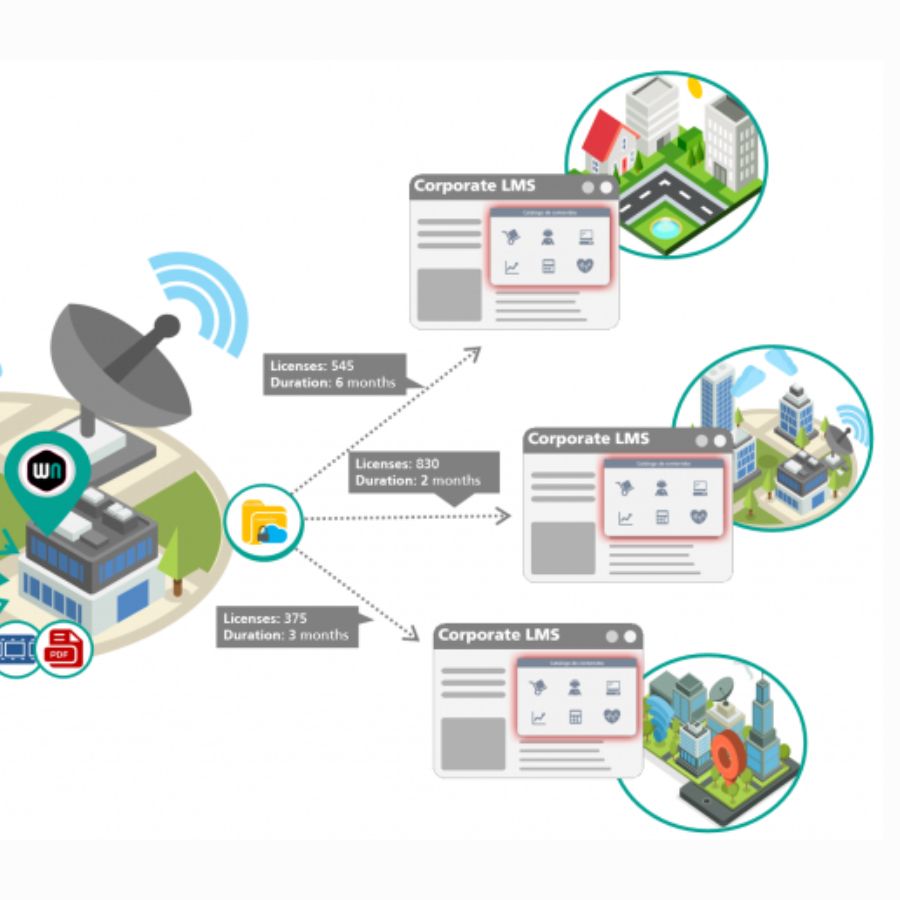
Corporate training is essential for employee development and organizational growth. In an increasingly digital business environment, the integration of efficient technological solutions becomes crucial. One standout solution is scormPROXY (formerly scormNEXT), a platform that offers a “scorm cloud” solution for remote SCORM content delivery. This provides an innovative approach to distributing e-learning courses to external Learning Management Systems (LMS). In this article, we will explore how integrating scormPROXY can enhance your corporate training strategy. The challenge of distributing content to external LMS Organizations managing their own e-learning course catalogs often face the challenge of adapting to the specific needs of clients using their own Learning Management Systems (LMS). The digital delivery of original SCORM content, while essential for flexibility and accessibility, is often a complex process. Common issues include: Ensuring seamless integration between the company’s internal systems and clients’ external LMS platforms. Loss of control over licenses and monitoring content usage. Security and rights management issues, where educational materials may be distributed or used beyond agreed-upon limits. Lack of a centralized system for monitoring and managing licenses, leading to an inconsistent user experience and difficulties in maintaining course updates and revisions. scormPROXY: An innovative solution scormPROXY presents itself as a comprehensive solution to overcome common challenges in remote course distribution through e-learning platforms (LMS). The platform simplifies this process through SCORM connectors, enabling a seamless connection between the company and external LMS platforms. A key feature of scormPROXY is its licensing system, providing precise control over content access and usage duration. This platform secures original SCORM content in the scormNEXT cloud, preventing direct delivery to clients. Moreover, implementing a customized licensing system offers flexibility, allowing companies to adjust settings according to each client’s specific needs. Step-by-step integration process for scormPROXY Integrating scormPROXY into your corporate training strategy opens the door to efficient and secure management of your educational content. Here is a step-by-step process for seamless integration. Step 1. Content upload Import your materials in formats such as SCORM 1.2, SCORM 2004, XAPI, PDF, or MP4 to the scormPROXY cloud storage. Organize your resources easily by creating folders and subfolders, especially useful when dealing with a variety of content. Step 2. Custom connector creation Configure your virtual course catalog by creating remote SCORM connectors based on the previously uploaded contents. You have the flexibility to generate multiple variants and combinations based on your needs. Step 3. Client registration Register clients with external LMS who wish to access your content. Specify for each client which courses from your catalog they can access. Additionally, set the number of licenses or allowed students and the access duration for each course. Step 4. Connector distribution Provide clients with the remote SCORM connectors generated in step 2 for them to integrate into their LMS platforms as conventional SCORM packages. These connectors do not include your original content but a remote viewer connecting to scormPROXY. Advantages of integrating scormPROXY into your corporate strategy Content protection and control: scormPROXY offers a robust solution for content protection and access control in the cloud. By maintaining original SCORM content on its platform, it prevents unauthorized delivery and ensures the security of your educational materials. Strategic automation with SCORM API: The powerful SCORM API of scormPROXY enables the automation of daily tasks and efficient integration with external systems. This functionality streamlines key processes, from billing to the transfer of analytical data. User experience and technical support: Enjoy a simple and flexible interface on scormPROXY, designed for easy and accessible distribution, eliminating the need for advanced knowledge. Furthermore, fast technical support with responses within 24 hours ensures a positive and hassle-free experience for users. Efficient remote client management: scormPROXY simplifies remote client management by providing personalized access to specific course catalogs. By onboarding your clients with external LMS, you can specify which courses from your catalog each client can access. This customization capability ensures that each client receives relevant content tailored to their needs. Detailed reports and precise user Progress Tracking: These reports offer a comprehensive view of user participation in courses. Detailed information on individual performance allows your organization to assess the impact of training and make informed decisions to improve and adapt strategies based on the specific needs of each client. Conclusion Integrating scormPROXY into your corporate training strategy not only simplifies content distribution to external LMS but also provides precise control over course access and usage. Its intuitive interface, flexibility, efficient technical support, and regulatory compliance make it a suitable choice for companies looking to optimize their digital training approach. Request a free demonstration and discover how scormPROXY can enhance your corporate learning strategy.

Solutions

Contact

Complejo Empresarial ATICA
Edificio 5, 2ª Planta
Avenida de Europa 26
28224 – Pozuelo de Alarcón
Madrid – ESPAÑA

info@welcomenext.com

Subscribe to our newsletter

Solutions

About Us

Contact

Complejo Empresarial ATICA
Edificio 5, 2ª Planta
Avenida de Europa 26
28224 – Pozuelo de Alarcón
Madrid – ESPAÑA
info@welcomenext.com
+34 911845972

Subscribe to our Newsletter

Copyright 2013 – 2026 WelcomeNext S.L. | All rights reserved | Privacy Policy | Legal Notice | Cookies policy
Scroll to Top